What is New Building Standard (NBS) and How Can it Affect a Building’s Insurance?

NBS is simply the assessment of the earthquake rating a property is expected to have when built to the current building code.  NBS therefore changes to reflect code changes.  NBS is calculated as part of a seismic assessment of how the building has been constructed.


The percentage of NBS rating is not a measure of the building’s ability to handle an earthquake without damage for insurance purposes but is about “life-protection”.  As such NBS is unlikely to alter the insurance premium unless the NBS is substantially below the current threshold.  Any increase in the NBS percentage may however improve the building’s expected performance in protecting life.


When a seismic assessment is performed by a structural engineer, this will result in an NBS rating being given to an existing building.  The assessment calculates the percentage NBS achieved.


Significantly NBS is measured at the lowest defective point in a building, so if there is a particular weakness which is rated 30%, the whole building will be rated 30% until the defect is addressed.


A building with a rating of less than 67% NBS is deemed to be an “earthquake risk”.  A rating less than 34% NBS means the building is “earthquake prone”.


If a building, or part of a building, is earthquake prone it is believed it will ultimately have its capacity exceeded in a moderate earthquake and if it were to collapse, would do so in a way likely to cause injury or death to persons in or near the building, or injury/death or damage to adjacent property.


If a building is found to be earthquake prone this doesn’t necessarily mean it shouldn’t be occupied.  The Building Act provides a period of years for strengthening or demolition work to be undertaken.


New Zealand is categorised into three risk levels

Source: How the system for managing earthquake-prone buildings works

The link below identifies what regions of NZ are in which risk category:

Seismic Risk Areas Map


For further information please contact Body Corporate Manager Alex McAllister: alex@bbcl.co.nz

Marsh Contents Solutions

Obtaining contents cover with the associated and necessary liability extensions is becoming very difficult for short term accommodation rental owners.

Click on the image below to find out about how Marsh Insurance can offer a solution for you.

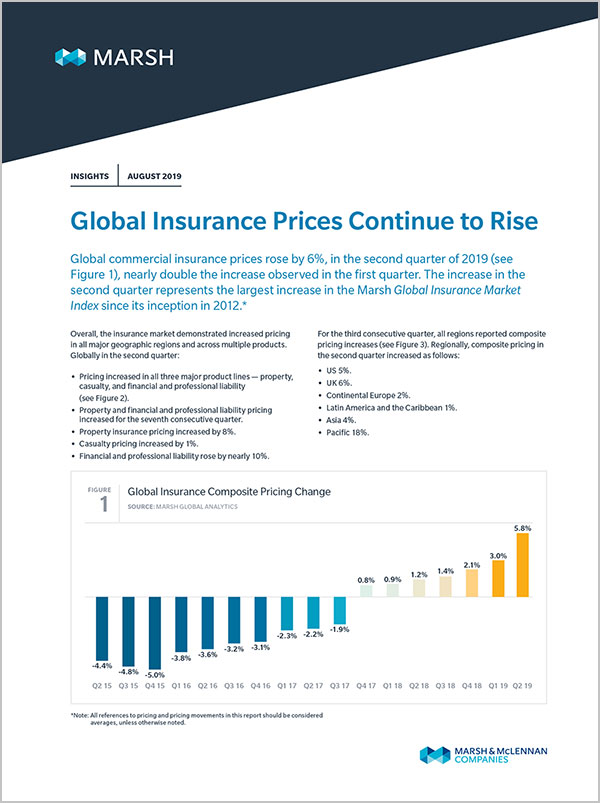
Insurance Costs Continue to Rise

Please click on the image below to view the article from Marsh.

Terrorism Exclusion

The recent atrocities in Christchurch with the Mosque attack brought home to BBCL the need to consider the potential impact of terrorism on Body Corporates.

Virtually every current Body Corporate policy has a terrorism exclusion from the material damage portion of the policy.  If the Body Corporate has a concern regarding terrorism, whether for any specific reason or simply to ensure full coverage, additional cover can be obtained upon request.  Should you feel that this is an omission from your current cover please contact your account manager.

Insurance Victory for BBCL Body Corporate

Christchurch’s unique situation has brought a number of challenges to our Christchurch Body Corporates.  The impact of Mother Nature has been both random and at times unjust.  Equally the insurance industry and its associated broking fraternity have responded in a variety of different fashions.  The catastrophic events suffered in Christchurch illustrate so clearly that the laissez faire attitude to insurance that many encompassed was shared not only by owners but also by many in the related industries.

One of BBCL’s Body Corporates has suffered huge challenges as a result of impreciseness in documentation relied on by the Body Corporate.  This documentation was supplied by its broker and the insurer.  This sadly has resulted in two lawsuits against both the insurer and the broker which have only caused further heart-ache to owners.

February 22 2011 saw the total complex declared an economic loss.  To this day the Insurer still will not accept that (despite 50% being demolished under an order from CERA) and the remainder requiring temporary strengthening to leave it habitable pending a controlled deomolition.

The BC relying on a replacement valuation looked to design a replacement complex for its central Christchurch site only to be advised that the replacement cost is nearly double the replacement valuation it received.  The extent of cover under the policy was disputed and an issue has also arisen as to whether or not EQC payments acted as an excess under the policy or not.  A simple reading of the policy document would suggest it does however when confronted with the claim the insurer alleged it did not.

The issue of whether EQC’s payments acts as an excess has now been resolved by a full bench of the High Court in Auckland and the Body Corporate is delighted to have received the judgment issued by Justice Courtney which has affirmed that a clear reading of the policy does in fact apply.

The end result is that instead of being limited in recovery to the valuation estimate the Body Corporate is able to recover both that plus the EQC pay-out of $6.8 million plus GST.  The total sum will certainly go a long way towards the cost of rebuild, if not completely, and will come as a huge relief to the 68 owners affected.

Managing claims of such scale and then preparing for rebuilding as required by the 2010 Unit Titles Act required a significant vote of faith by owners and their hardworking Committee in BBCL and the supporting professionals.  BBCL share’s the owners delight at the successful High Court award and looks forward to progressing with the Body Corporate a complete rebuild over the coming years.


Quake Impacts

Whilst the position in terms of the impact of Christchurch’s quake on the New Zealand insurance market remains cloudy, it appears the insurer’s response will resemble post 9/11 where rates were increased virtually overnight and significant excesses have applied.

Most insurers to date have increased their earthquake rates drastically, as much as 70% for Auckland, despite being rated as the lowest statistical earthquake zone. Buildings will also be rated upon their age, with increases of up to 20% on buildings pre-1935 likely.

Most significantly, is the excess structure will change from a minimum percentage of loss to a minimum percentage based on site value. As a result, the current excess of 1% of loss may end up being many percent of actual loss – e.g. If a site was valued at $10 million and the percentage of site value is 2.5%, then the excess would be $250,000 for an earthquake, whether or not the extent of loss was $250,000 or $5 million.

The only thing that is certain is that costs will increase significantly, and only time will reflect the actual impact on premiums and budgets. We will keep you updated.